Hyderabad Borewell Drillers
Borewell Contractors · Hyderabad
New borewells
🕳️ Borewell DrillingNew bore, casing and handover 🤖 Robo Borewell DrillingNarrow lanes and inside the house 🏠 Home BorewellIndependent houses and villas 🏢 Apartment & CommercialSocieties, offices and factoriesExisting borewell problems
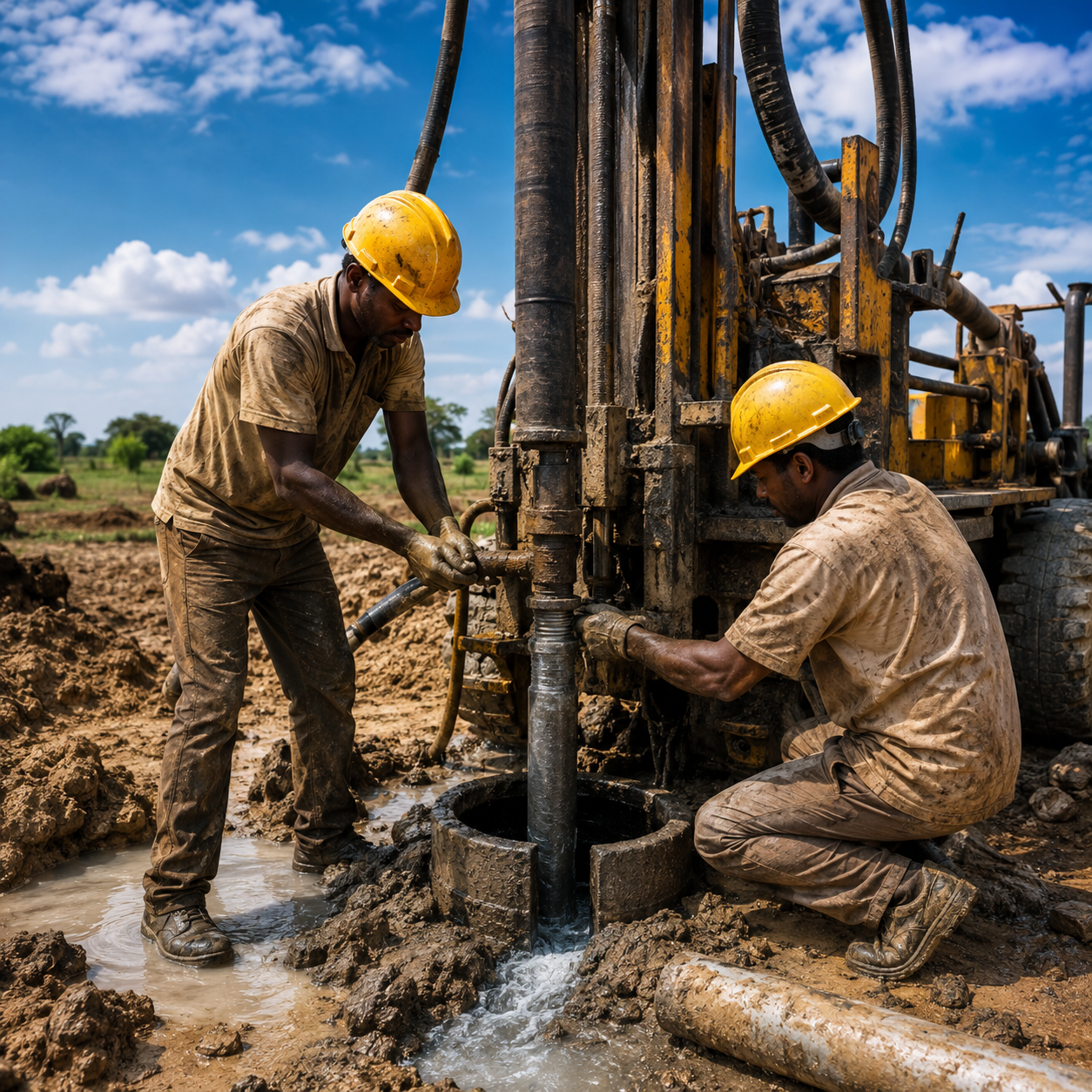
💧 Borewell ReboringBore stopped giving water 🌀 Borewell CleaningWater reduced or sand coming ⚙️ Pump & Motor FittingNew pump or pump not working 📄 Borewell PermissionPapers you need before drillingHyderabad Borewell Drillers assesses your existing borewell on site before recommending reboring — checking depth, casing condition and current water level, so the decision to deepen is based on what your bore actually needs, not a guess over the phone.
Borewell reboring means deepening or reworking an existing borewell instead of drilling a new one, usually considered when water output has dropped or a bore has gone dry. It suits homeowners, apartments and commercial properties with an existing bore in workable condition. Cost and duration depend on depth, casing condition and site access, and are confirmed only after a physical inspection.
| Quick Fact | Information |
|---|---|
| Typical cost range | Depends on depth, casing and site access — confirmed after a free site assessment. |
| Typical duration | Varies with depth and ground conditions — timeline shared after the site visit. |
| Best for | Existing borewells with reduced yield, intermittent flow, or a bore that has gone dry, where the casing and formation still allow further drilling. |
| Machine used | DTH rig or rotary rig, chosen based on the existing borewell's depth and condition. |
| What's included | Site inspection, depth and water-level check, casing condition assessment, and a written recommendation. |
| What's extra | Casing pipe if replacement is needed, and pump-related work if requested separately. |
← swipe the table sideways to see all columns →
Low water output can have more than one cause — an on-site check is what tells you whether reboring is the right next step.
A drop in output over time is one of the most common reasons people ask us about reboring — but the cause needs to be checked first.
If the pump itself is in order, the issue may be with the bore, the casing, or the water table — worth a site check before assuming reboring is needed.
Deepening an existing bore is possible in some cases, depending on its current depth, casing and the rock formation below.
Intermittent flow can point to a few different issues, and an inspection helps identify whether reboring will actually address it.
Cleaning and reboring solve different problems — we can help you tell which one applies after looking at your bore.
Whether an existing bore is still worth working with depends on its depth, casing condition and the surrounding rock — not something to guess without a look.
A general outline of the steps involved — the exact approach for your borewell depends on what we find during the inspection.
We start by physically inspecting the existing borewell and the surrounding site.
Current depth and water level are checked to understand how the bore is performing.
The casing pipe and borewell condition are assessed for wear, damage or collapse.
Based on the inspection, we determine whether reboring is technically feasible for that bore.
Drilling equipment is selected based on the depth, casing and rock formation involved.
Where feasible, the bore is deepened and developed as part of the reboring work.
The reworked borewell is checked, and we share our findings and recommendation with you.
The equipment chosen for a reboring job depends on the existing borewell's depth, casing and the rock formation below your site.
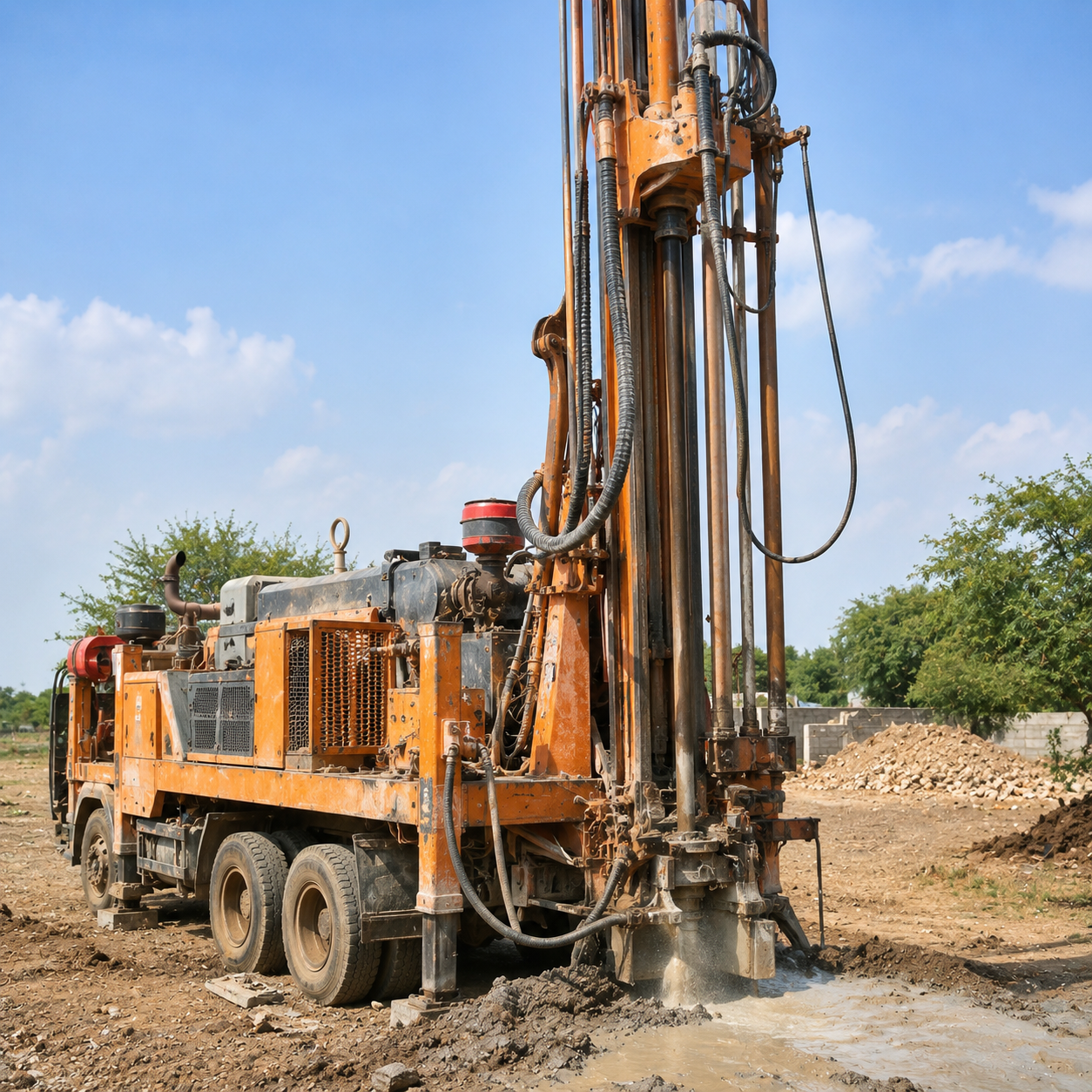
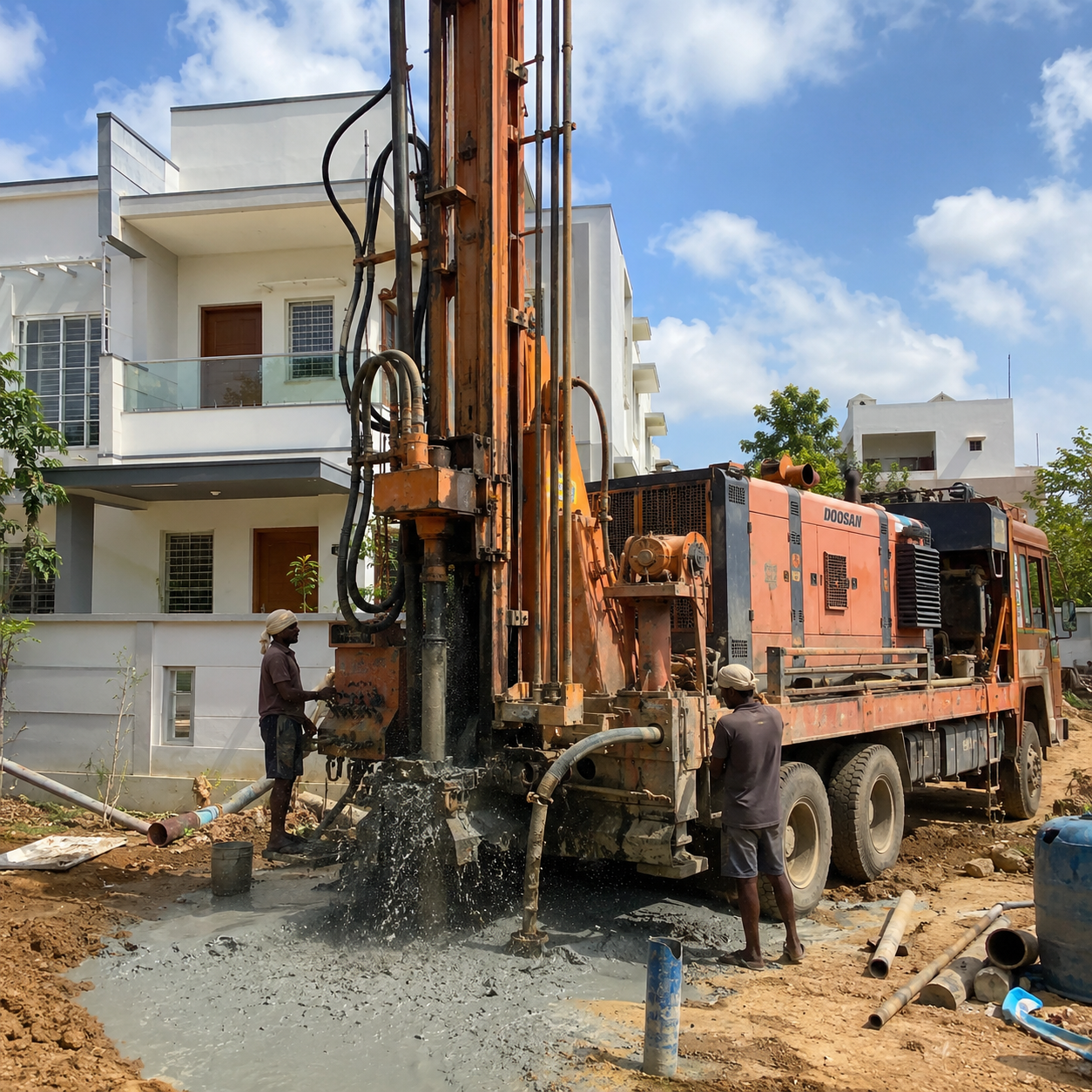
A general-purpose drilling rig used to inspect and work on the existing bore where the access and depth requirements allow it.
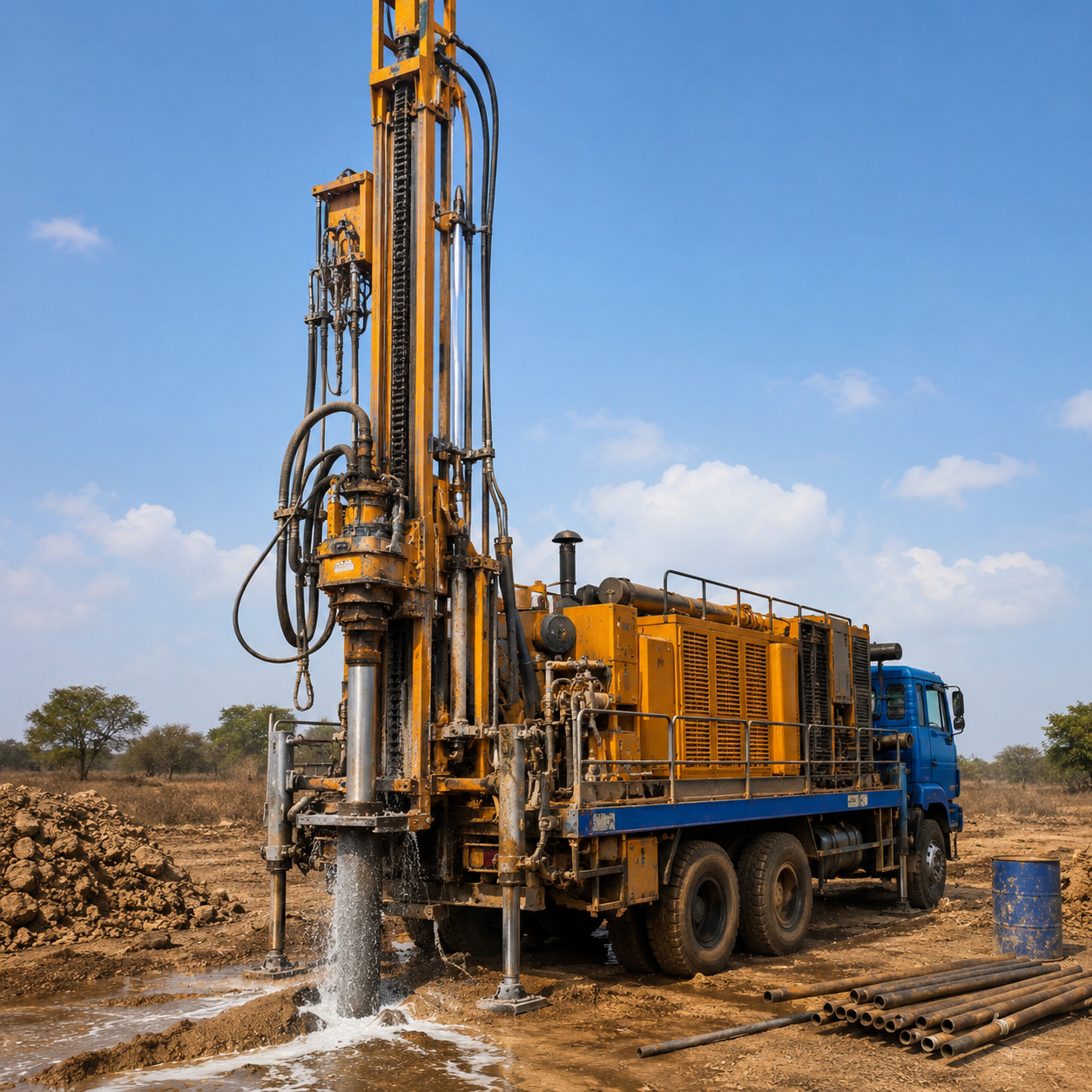
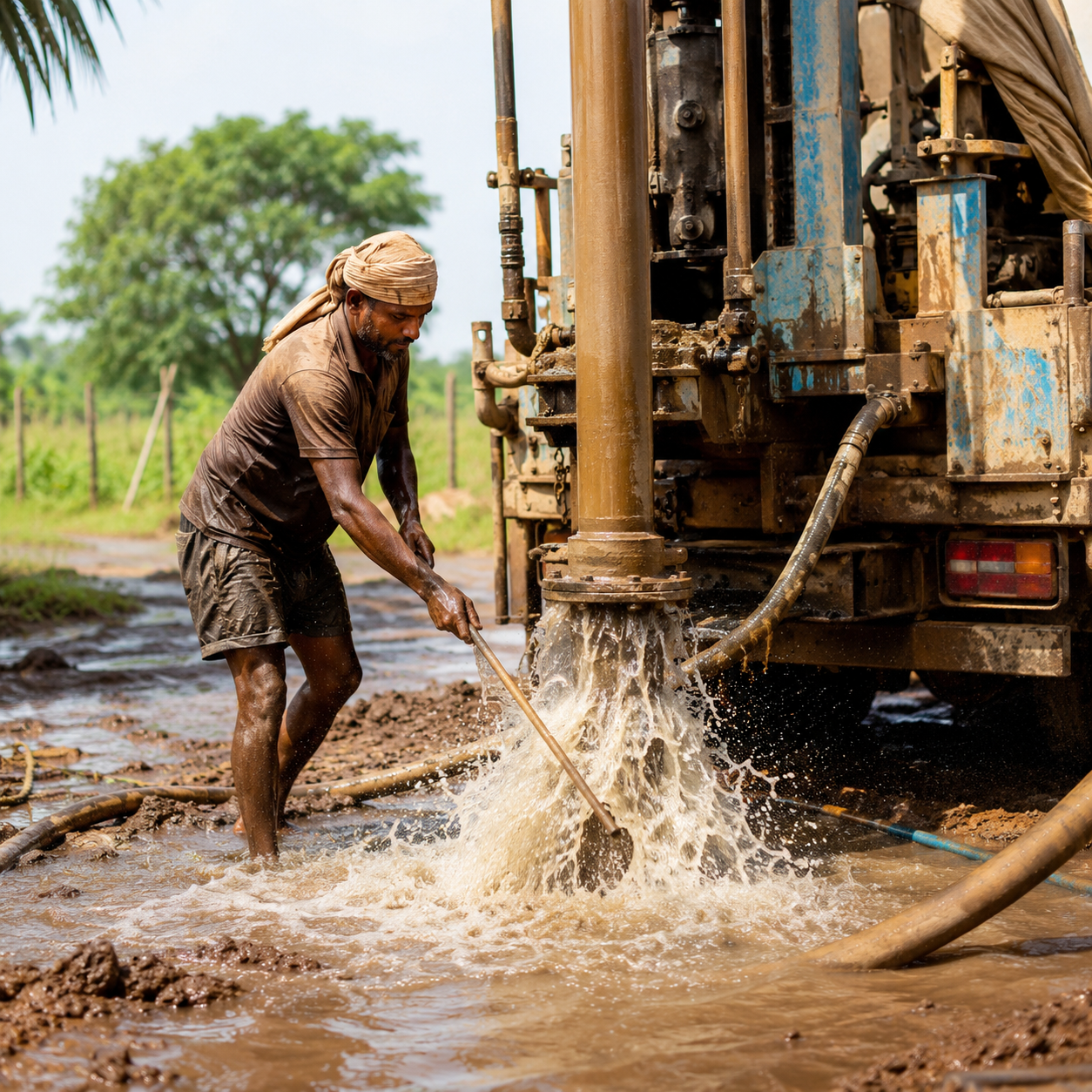
A rotary drilling setup that can be used during reboring depending on the soil and rock layers encountered at your site.
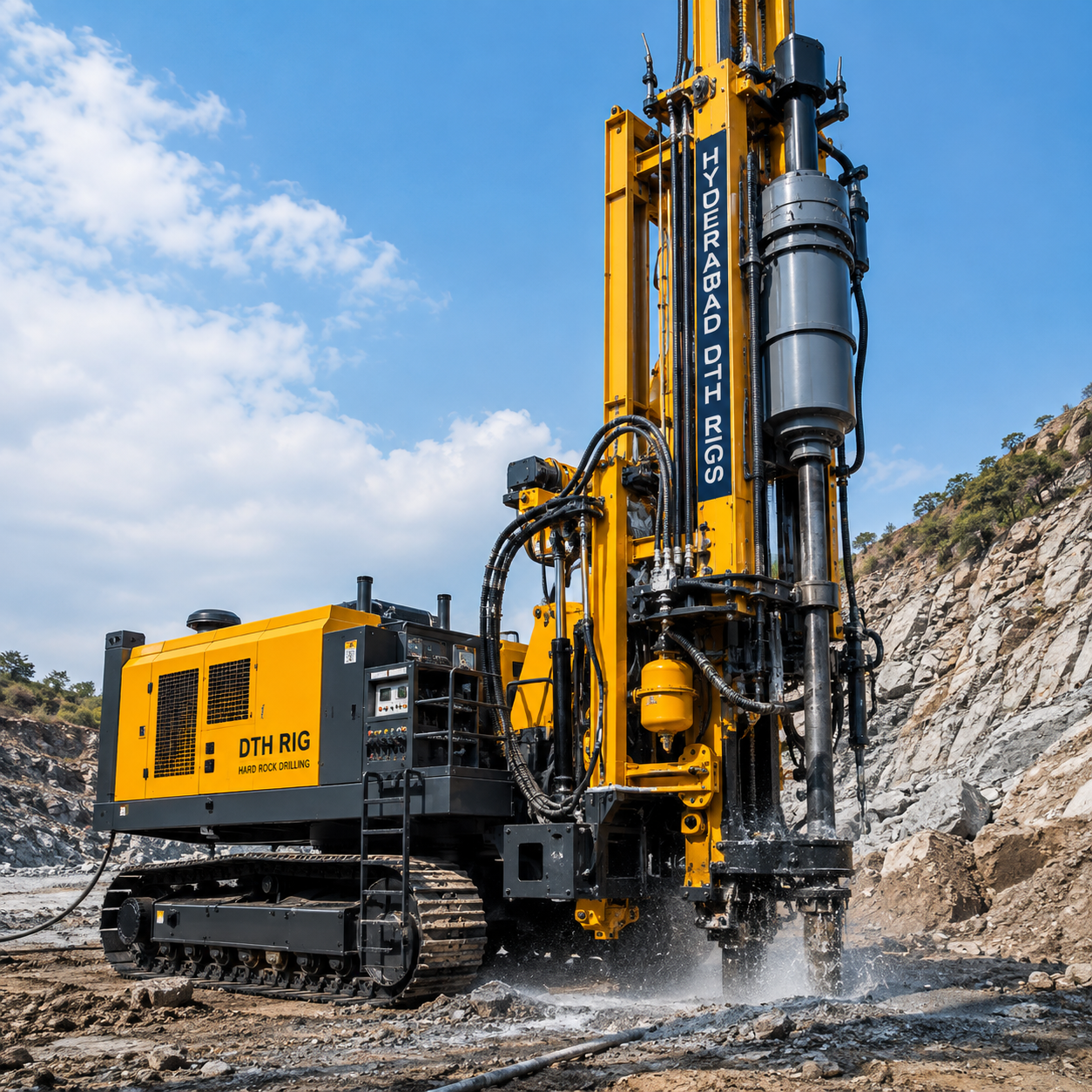
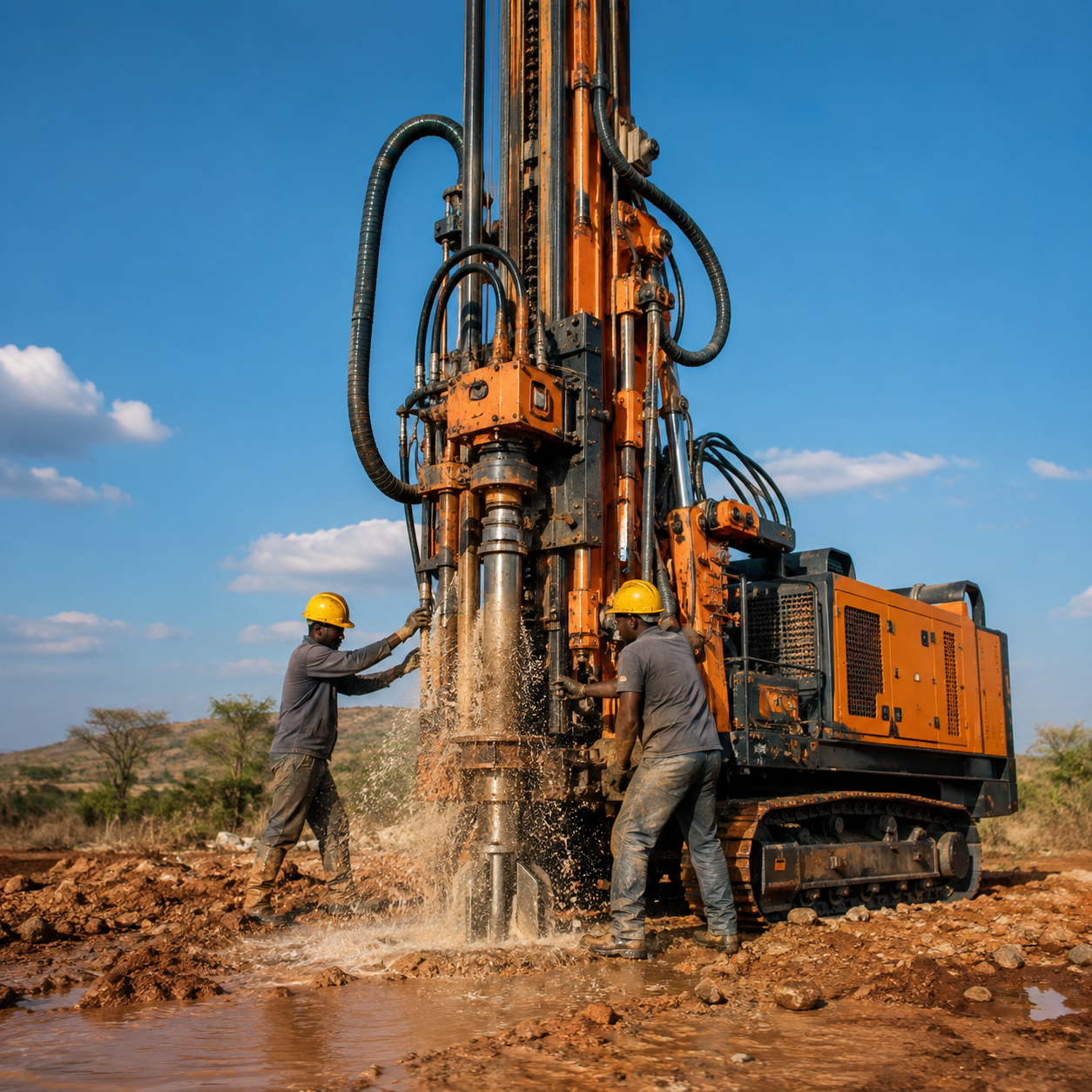
DTH stands for "down-the-hole" — a hammer drilling method commonly used for hard-rock formations, which are common across much of Hyderabad.
Reboring costs are not fixed — a few genuine site factors decide what a particular job involves.
The depth, casing condition and current state of your existing bore affect how much work is needed.
How far the bore needs to be deepened plays a direct role in the overall scope.
The rock and soil layers below your site affect the equipment and effort needed.
Repairing, replacing or extending casing pipe adds to the scope where it's needed.
How easily equipment can reach and be positioned at your borewell affects the job.
Reboring work in Hyderabad is shaped heavily by what lies underground. Much of the city sits on granite and granite-gneiss hard rock, but the depth of weathered and fractured zones above that rock varies from one plot to another, which affects how a bore behaves over time and whether deepening it is practical. The condition of the existing casing and how easily equipment can reach the borewell also differ from a compact plot in an old lane to an open site in a newer layout. Because of this, two borewells on the same street can need very different approaches, which is why we assess each one individually rather than applying a standard process.
మేము పని చేసే ప్రాంతాలు
Not sure reboring is the right fit? These related services may be worth a look too.
For sites where a new borewell is a better option than deepening an existing one.
View Service
For borewells where silt or debris buildup, rather than depth, may be affecting water flow.
View Service
For narrow lanes and tight-access plots where a standard rig cannot reach the borewell.
View ServiceStraight answers to the questions Hyderabad customers ask us most about reboring.
Borewell reboring is the process of deepening or reworking an existing borewell instead of drilling a completely new one, usually considered when the existing bore's water output has reduced.
In many cases, yes — but it depends on the current depth, the condition of the casing, and the rock formation below. This can only be confirmed after an on-site inspection.
Low water output can be caused by silt buildup, a dropping water table, or other factors — not only depth. An inspection helps identify the actual cause before deciding between cleaning and reboring.
This depends on your existing bore's condition and depth compared to drilling fresh. We can walk you through both options after assessing your site.
Not always. Some existing bores may not be suitable for reboring due to their casing condition or formation, which is why an assessment comes before any recommendation.
Yes. Hyderabad largely sits on granite and granite-gneiss hard rock, and how weathered or fractured that rock is below your specific site affects whether reboring is a practical option.
Permission requirements can apply depending on your property type and location. We can guide you on what may be needed for your specific site.
Tell us what's happening with your borewell and we'll help you understand whether an assessment for reboring makes sense for your site.